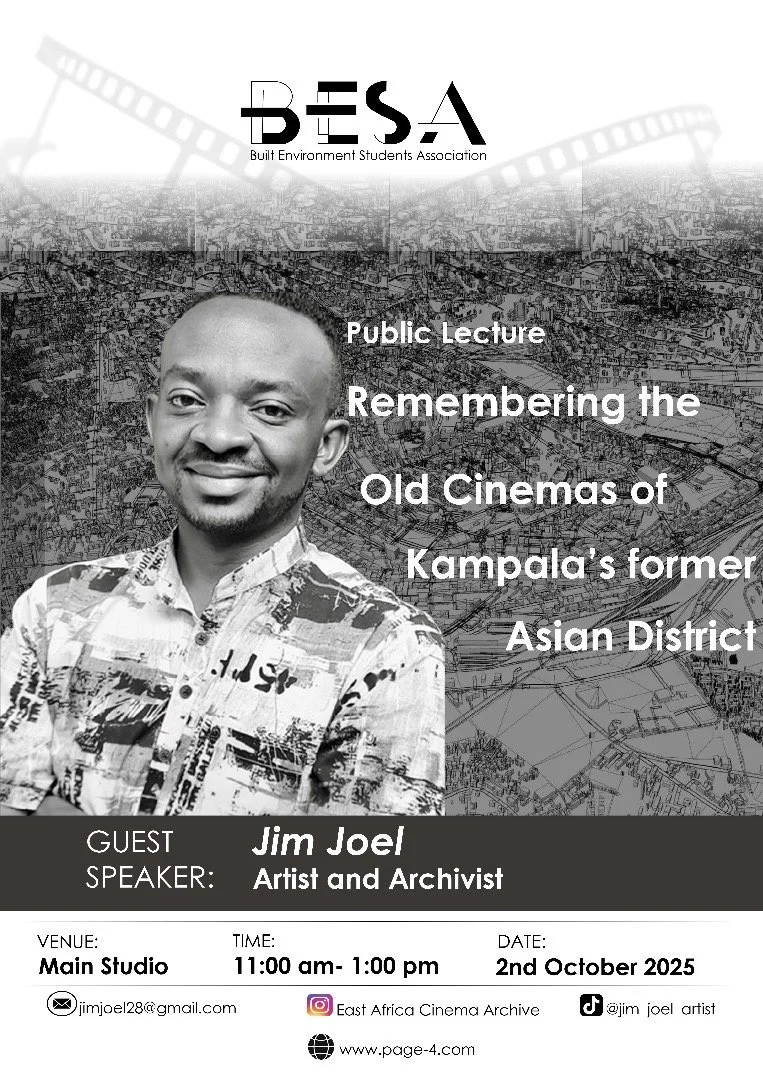

Chai & Cinema II
Exhibition Title: Chai and Cinema 2: Remembering the Old Cinemas of Kampala's Former Asian District
Exhibition Type: Public Lecture, Academic Pop-Up Exhibition & Material Curation Lab
Hosting Institution: Faculty of the Built Environment, Uganda Martyrs University (UMU)
Venue: Uganda Martyrs University Campus, Nkozi, Western Uganda
Duration: One-Day Interactive Exhibition & Lecture
Target Audience: Architecture students undertaking specialized course units in Cinema Architecture
Key Media/Objects: Documentary Photography, Archival Diptychs, Raw Spice Stations, Vintage Tea Cups, and Oliwa (Experimental Comic Project)
"Chai and Cinema 2" evolved from a traditional gallery installation into an active academic incubator, taking the form of a targeted public lecture and pop-up exhibition at Uganda Martyrs University in Nkozi, Western Uganda. Hosted by the Faculty of the Built Environment, this second iteration shifted the continuous project archive into a direct dialogue with future architects who study cinema architecture as part of their professional training. The presentation, titled "Remembering the old cinemas of Kampala's former Asian district," used sensory art, interactive materiality, and visual design to explore the tangible and intangible heritage of Uganda's mid-century urban landscape.
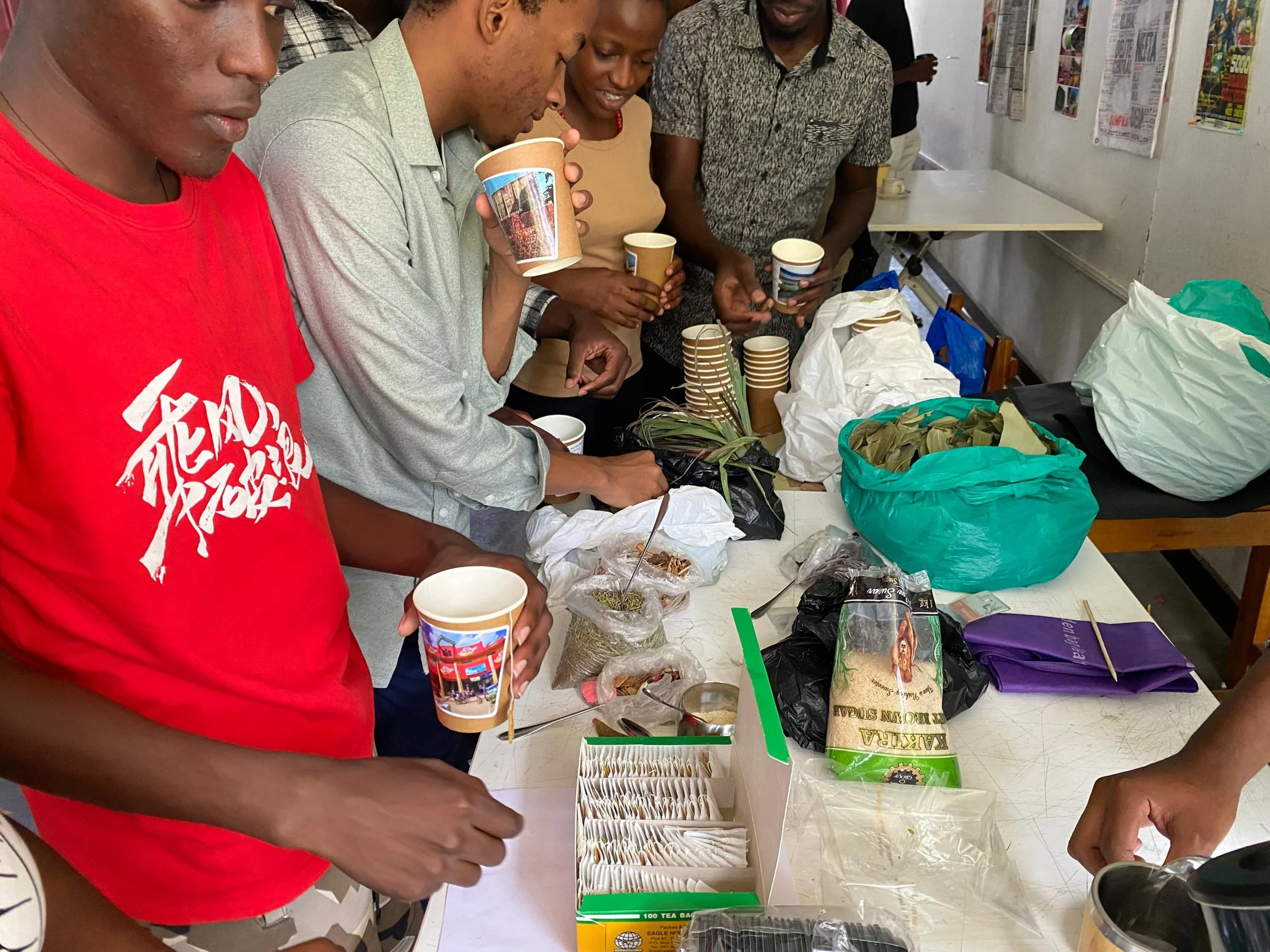
The exhibition subverted conventional white-wall settings by converting classroom studio tables into active display boards. The curation focused on the complex historical layout of Kampala’s old entertainment zones, tracing how architecture, post-independence migration, and trade routes continue to define modern spaces. To ground the students' theoretical coursework in real-world visual research, large-format photographic diptychs were displayed alongside physical objects of memory. Vintage tea cups served as domestic landmarks across the tables, flanked by the layout of raw spices and the debut of Oliwa—an experimental comic strip project using illustrative narrative design to archive disappearing city structures.
Intangible Preservation in Practice
Rather than remaining a passive slide lecture, the event operated as a hands-on sensory workshop. While analyzing the geometric profiles, cultural displacement, and functional transitions of Kampala's cinema cemetery, students and faculty actively drank spiced tea together. As they sipped, the students used the raw ingredients laid out across the studio tables to identify the different spices, visually and taste-testing the exact flavor profiles that defined the 1970s theater social scenes. This shared ritual triggered intense question-and-answer sessions regarding the politics of preservation and development in East Africa. The collective sentiment of the academic engagement was summarized in a powerful highlight phrase coined during the debate: "If tea has survived, why not cinema as heritage?"
Installation View.